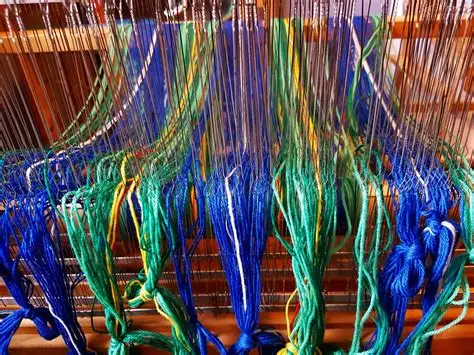
Loom Weaving
Table four-shaft loom weaving is a foundational textile technique that allows weavers to create a wide range of patterned fabrics on a compact, tabletop loom. The loom uses four shafts, each holding a set of heddles through which warp threads are threaded. By lifting different combinations of shafts, the weaver controls which warp threads rise and which remain down, forming a shed through which the weft thread is passed.
The process begins with warping the loom, a precise and time-consuming stage where warp threads are measured, wound, and evenly tensioned. Each thread is then threaded through the heddles according to a chosen draft, which determines the structure and pattern of the cloth. Common weave structures such as plain weave, twill, and simple satin can all be produced on a four-shaft loom.
Once the loom is dressed, weaving begins. The weaver lifts shafts using levers or cords beneath the table loom, creating alternating sheds. The weft is passed through with a shuttle and beaten into place with the reed to build the fabric row by row. Table four-shaft looms are valued for their portability, control, and versatility, making them ideal for learning complex weave structures while producing functional and decorative textiles.